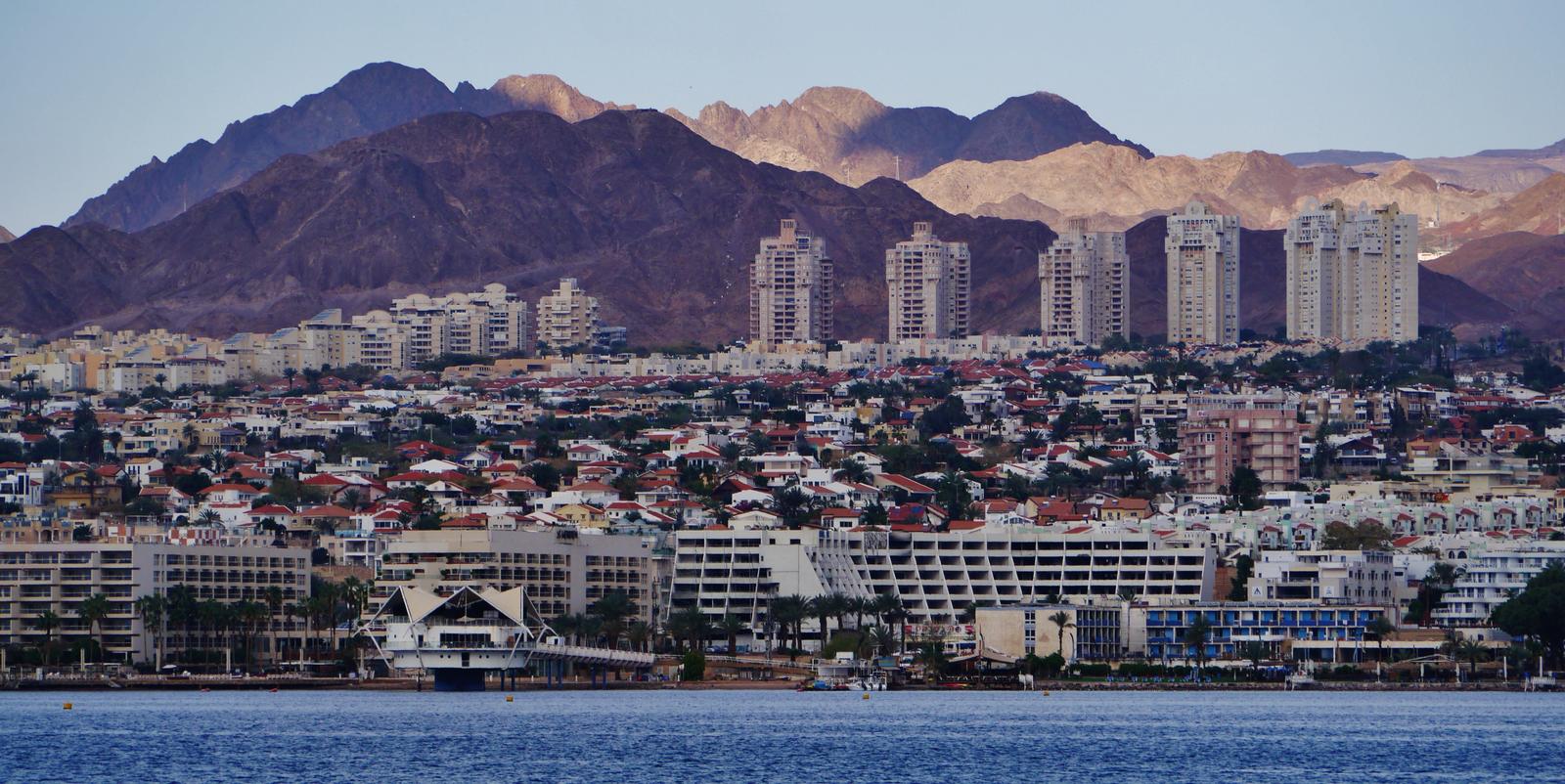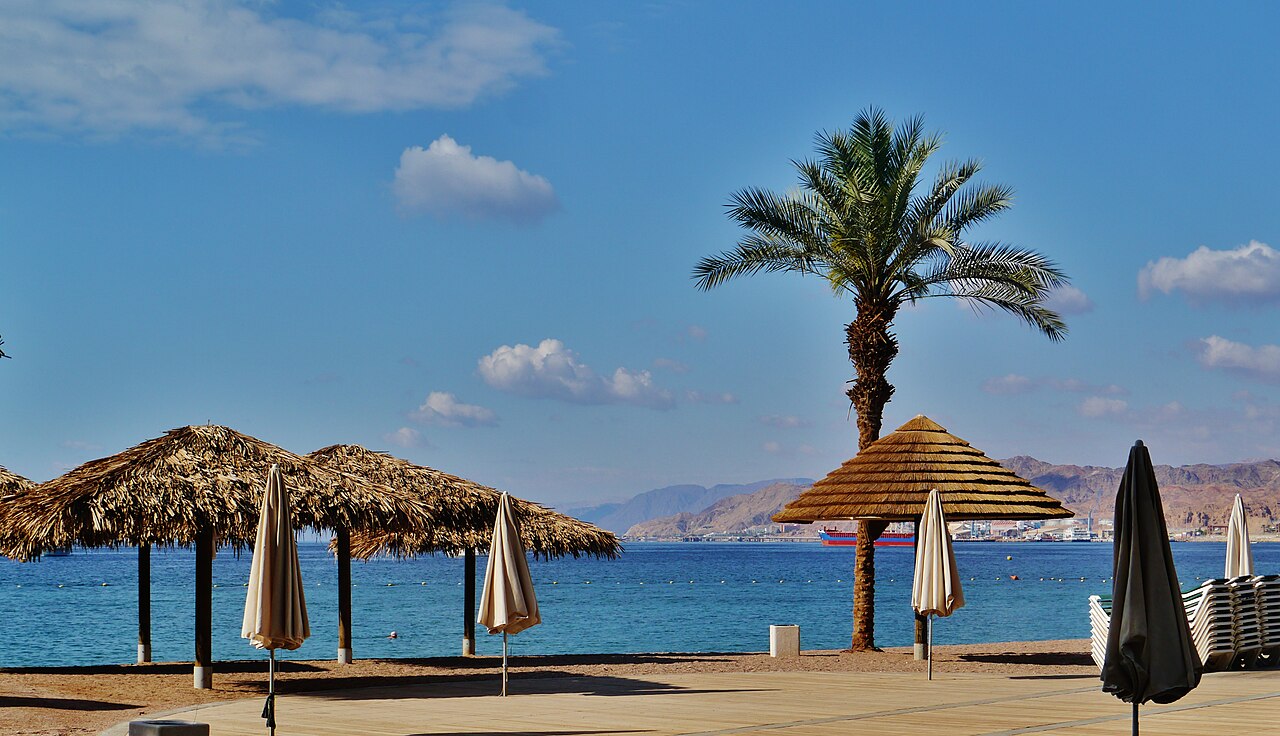
Eilat's weather by month follows a simple pattern. Winters are mild and sunny, with typical daytime highs of about 22–24°C. Spring warms up quickly, and summers are very hot, with average highs of about 41°C in July and August. Rain is rare in any month.
If you want comfortable weather for walking and sightseeing, look at November to April. If the sea is the main reason for your trip, May to October works well, as long as you plan your days around the midday heat. Below you'll find a month-by-month table based on official averages from the Israel Meteorological Service (IMS), and notes on what each season means for beach time and outdoor plans.
Eilat's climate at a glance
Eilat is a hot desert city on the shore of the Gulf of Eilat, at the northern end of the Red Sea. It rarely rains. In most months the rain gauge reads zero. For example, the IMS recorded 0 mm of rain in Eilat in April 2025 and again in October 2025.
The figures in this guide are IMS multi-year averages for 1991–2020, the reference period the IMS uses in its monthly weather summaries. For each month you get two numbers. The first is the average daytime high, which the IMS calls the mean daily maximum. The second is the average night-time low, or mean daily minimum. We've rounded both to whole degrees.
Keep in mind that an average is not a forecast. Any single month can be noticeably warmer or cooler, and recently Eilat has often been warmer than average. In November 2025, for instance, daytime temperatures ran 3.5°C above the long-term average. Always check the current forecast before you travel.
Eilat weather by month: average highs and lows
| Month | Typical daytime high | Typical night low | What it feels like |
|---|---|---|---|
| January | 22°C (71°F) | 11°C (51°F) | Mild sunny days, chilly evenings |
| February | 24°C (74°F) | 12°C (54°F) | Mild and pleasant, cool nights |
| March | 27°C (81°F) | 15°C (59°F) | Warm days, comfortable nights |
| April | 32°C (89°F) | 19°C (66°F) | Hot by midday, warm evenings |
| May | 36°C (97°F) | 23°C (73°F) | Hot; mornings and evenings are best outdoors |
| June | 39°C (103°F) | 25°C (78°F) | Very hot, warm nights |
| July | 41°C (105°F) | 27°C (81°F) | Peak heat |
| August | 41°C (105°F) | 28°C (82°F) | Peak heat, warmest nights |
| September | 38°C (100°F) | 26°C (78°F) | Still very hot |
| October | 34°C (93°F) | 22°C (72°F) | Hot days, warm evenings |
| November | 28°C (83°F) | 17°C (62°F) | Warm days, pleasant evenings |
| December | 23°C (73°F) | 12°C (54°F) | Mild days, cool evenings |
Source: Israel Meteorological Service monthly summaries, 1991–2020 averages for Eilat. Figures are rounded, and the Fahrenheit values are our own conversions.
Winter (December–February): mild days, cool evenings
Winter is when Eilat's climate stands out most from the rest of Israel. Average highs are about 22–24°C, and nights drop to around 11–12°C. You can sit outside in the sun at midday, but you'll want a light jacket or a warm layer once the sun goes down.
Winters vary from year to year. January 2025 averaged 24.0°C by day, 2.4°C warmer than usual. February 2025 went the other way and was 1.2°C cooler than average. For more on the winter months, including what to do and what to pack, see our guide to Eilat in winter.
Spring (March–May): warming up fast
March is warm and comfortable, with average highs of about 27°C and nights around 15°C. By April the average high is about 32°C, and by May it reaches about 36°C. Spring in Eilat is short, and the heat builds quickly.
Early heatwaves do happen. On 16 March 2025 Eilat reached 37.9°C, a new record for March according to the IMS. That whole month was 2.1°C warmer than average by day.
From April on, it makes sense to plan walks, hikes and other outdoor activities for the early morning or late afternoon. Leave the middle of the day for the sea, the shade or indoor plans.
Summer (June–September): sea, shade and air conditioning
Summer in Eilat is very hot. From June to August, average highs are about 39–41°C. Nights stay warm, at around 25–28°C, so evenings don't bring much relief. September is only a little cooler, with average highs of about 38°C.
Recent summers have often been hotter than these averages. In August 2025 Eilat's daytime highs averaged 41.5°C and its nights 29.5°C, both above the long-term figures. During a heatwave in mid-August that year, the IMS reported that Eilat reached 48.8°C at the peak on 13 August.
Think of a summer trip as a holiday built around the sea and air conditioning. Go to the beach early in the morning and again in the late afternoon. In the hottest hours, stay in the shade or indoors. Before and during your stay, check the IMS website for heat warnings and follow the official guidance.
Autumn (October–November): the warm shoulder season
October is still hot, with average highs of about 34°C and nights around 22°C. November is noticeably more comfortable, at about 28°C by day and 17°C at night. For many visitors, November is the start of the mild season.
Hot spells can still happen in autumn. On 3 October 2025 Eilat reached 39.8°C, and November 2025 averaged 3.5°C above normal by day. If you're travelling in autumn, pack for warm-to-hot weather and check the forecast close to your dates.
If you're looking at December dates and the Israeli school break, our guide to Hanukkah in Eilat 2026 covers the holiday period.
How warm is the sea in Eilat?
We couldn't find an official month-by-month series for Eilat's sea temperature, so this guide doesn't give monthly figures. Numbers on commercial weather sites may differ from official monitoring data.
Here is what the monitoring does show. The Gulf of Eilat National Monitoring Program is run by the Interuniversity Institute for Marine Sciences in Eilat. According to its annual report, as covered by The Times of Israel, the highest sea surface temperature on record was 31.0°C, measured in 2021. A scientific paper dates that peak to a marine heatwave in August 2021, which fits the general pattern of the sea being warmest in late summer.
The same report describes surface water in the gulf warming over the decades, by about 0.42°C per decade since monitoring began. How warm the water feels on a winter's day is personal. If you're coming between December and February mainly to swim, read the sea notes in our winter guide.
So when is the best time to visit Eilat?
There's no single best month. It depends on what you want from the trip.
- For mild weather, walking and day trips: November to April. Days are warm to pleasant and nights are cool. December to February is the mildest stretch, and March and November are warmer.
- For beach and water time: May to October, when the air is hot and the sea is warm (warmest in late summer). Plan the day in two halves, with the sea in the morning and late afternoon and shade in between.
- For the hottest weeks: if July and August are your only option, the trip still works, but it's a sea-and-air-conditioning holiday rather than a hiking one.
- For shoulder seasons: March to April and October to November balance warmth and comfort. Early heatwaves (March) and late ones (October) can still happen.
School holidays and Jewish festivals also affect your plans, because their dates shift from year to year. Check the calendar for your dates before you book.
Practical tips
- Check the forecast, not just the averages. The Israel Meteorological Service publishes forecasts and official warnings, including heat warnings.
- Pack for both day and night. In winter, bring a warm layer for the evenings. In summer, bring sun protection and light, loose clothing.
- Plan outdoor activities around the heat. From April to October, start early and keep long walks or hikes out of the middle of the day.
- Mind Shabbat. Shabbat, the Jewish day of rest, runs from Friday evening to Saturday evening, and some services and businesses close or run reduced hours. Central Park Residence doesn't take arrivals on Saturdays, but a stay that starts earlier can include Saturday night.
FAQ
What is the hottest month in Eilat?
July and August are the hottest months. Both have average daytime highs of about 41°C (1991–2020 IMS averages), and August has the warmest nights, at about 28°C. Individual days can be much hotter during heatwaves.
Is Eilat warm enough in winter?
For most people, yes, during the day. In January the average high is about 22°C and the average low about 11°C, according to the IMS. Evenings feel cool, so pack a jacket. Our Eilat in winter guide has the details.
Does it rain in Eilat?
Very rarely. In most months no rain falls at all; the IMS recorded 0 mm in Eilat in April 2025 and in October 2025. Occasional showers do happen, so it's worth checking the forecast for your dates.
How warm is the sea in Eilat?
There are no official monthly figures we can point you to. The sea is warmest in late summer, and the highest surface temperature on record in the Gulf of Eilat was 31.0°C in 2021, according to the national monitoring program. Monitoring also shows the gulf's surface water warming over the decades.
Where can I check the current forecast?
The Israel Meteorological Service at ims.gov.il publishes official forecasts and weather warnings for Eilat. Check it a few days before you travel and again during your stay, especially in the hot months.
If you're looking for a place to stay in Eilat in any season, you're welcome to see our suites. Central Park Residence is a complex of holiday apartments a 6-minute walk from the sea. Every apartment has air conditioning, a private balcony and a fully equipped kitchen. Current prices and availability are on our booking page.
Sources
- Monthly Weather Conditions - January 2025 (January 2025 Summary) - Israel Meteorological Service
- סיכום פברואר 2025 - Israel Meteorological Service
- Monthly Weather Conditions - March 2025 - Israel Meteorological Service
- Monthly Weather Conditions - April 2025 - Israel Meteorological Service
- May 2025 Summary - Israel Meteorological Service
- June 2025 Summary - Israel Meteorological Service
- סיכום יולי 2025 - Israel Meteorological Service
- סיכום אוגוסט 2025 - Israel Meteorological Service
- August 2025 Summary (English) - Israel Meteorological Service
- Heatwave Summary of 8-14 August 2025 - Israel Meteorological Service
- סיכום ספטמבר 2025 - Israel Meteorological Service
- October 2025 Summary - Israel Meteorological Service
- סיכום נובמבר 2025 - Israel Meteorological Service
- סיכום דצמבר 2025 - Israel Meteorological Service
- Israel Meteorological Service - forecasts and warnings
- Sea surface temperatures continue to rise in Gulf of Eilat - annual report (The Times of Israel)
- Reef building corals show resilience to the hottest marine heatwave on record in the Gulf of Aqaba (Frontiers in Marine Science)